
Discover Precision Testing for Sustainable Agriculture and Beyond
rTek’s soil carbon testing services are your premier partner for cutting-edge analyses of soil, carbon, biochar, food, beverages, and more in Kazakhstan. As the only company delivering international-standard testing amid local challenges, we provide end-to-end solutions compliant with global benchmarks. Our exclusive partnership with Perennial enables robust soil carbon monitoring, reporting, and verification (MRV) services aligned with Verra, Gold Standard, Puro Earth, and other registries.

Whether you’re optimizing farm yields, verifying carbon credits, or ensuring product quality, rTek combines state-of-the-art equipment with expert processes to deliver actionable insights.
The state-of-the-art laboratory specializes in comprehensive soil testing services, empowering farmers, agronomists, and environmental consultants with precise data to enhance soil health, optimize fertility, and ensure sustainable land management. Leveraging advanced analyzers like the Skalar Primacs SNC100, San++, SP2000 series, and complementary instruments, we deliver accurate measurements of essential nutrients, carbon fractions, physical properties, and quality indicators.
Beyond soil, our capabilities extend to diverse sample types including water, wastewater, plant extracts, fertilizers, compost, biochar, sludges/sediments, food/beverages, animal feed/grain, malt, oil/gas products, beer/wine, tobacco, pharmaceuticals, clinical specimens (serum/plasma/urine), and industrial materials—supporting industries from agriculture and environmental monitoring to food production and quality control.
Key parameters analyzed include:
TN – Total Nitrogen
Method: Dumas dry combustion (high-temperature catalytic oxidation with chemiluminescence detection for N).
Instrument: Skalar Primacs SNC100.
Detection range: 0.06–46% (depending on sample matrix; low ppb in liquids to high % in solids).
Precision: Typical RSD <0.5% for repeatability.
Applications: Essential for assessing soil fertility, nutrient cycling, and organic matter in agricultural and environmental samples.
TC – Total Carbon
Method: High-temperature catalytic combustion with infrared detection for C.
Instrument: Skalar Primacs SNC100.
Detection range: 0.01–80% (depending on sample matrix; low ppb in liquids to high % in solids).
Precision: Typical RSD <1% for repeatability.
Applications: Measures overall carbon content in soil for carbon sequestration studies, compost quality, and environmental monitoring.
TOC (NPOC) – Non Purgeable Organic Carbon after acid purging
Method: Acid purging to remove inorganic carbon, followed by high-temperature combustion and IR detection (NPOC method); alternatively, calculated as TC – TIC.
Instrument: Skalar Primacs SNC100.
Detection range: 0.01–80% (aligned with TC; low ppb in liquids).
Precision: Typical RSD <1% for repeatability.
Applications: Evaluates organic carbon in soil and water for assessing humus levels, pollution, and carbon cycling.
TIC (Purgeable Inorganic Carbon) via TC – NPOC
Method: Calculated as TC – NPOC/TOC, or direct via automatic acidification and purging with IR detection.
Instrument: Skalar Primacs SNC100.
Detection range: 0.01–80% (aligned with TC; low ppb in liquids).
Precision: Typical RSD <1% for repeatability.
Applications: Quantifies inorganic carbon (e.g., carbonates) in soil for pH buffering, lime requirement, and geological assessments.
Carbon pools – TOC400, ROC, TIC900 (DIN19539)
Method: Temperature-dependent differentiation via programmable ramping combustion (TOC400 at 400°C for labile organic C; ROC/TEC at 600–900°C for residual oxidizable C; TIC900 at 900°C for inorganic C), compliant with DIN 19539 and EN 17505.
Instrument: Skalar Primacs SNC100.
Detection range: 0.01–80% total, with fractionation.
Precision: Typical RSD <1% for repeatability.
Applications: Detailed carbon speciation in soil for climate change research, soil stability, and sustainable farming practices.
K – Potassium
Method: Colorimetric (tetraphenylborate precipitation for turbidity measurement) via continuous flow analysis, or flame emission photometry.
Instruments: Skalar San++ (CFA) or Skalar Model 410 Flame Photometer.
Detection range: Low ppb to high ppm (CFA: ~0.1–100 mg/L; Flame: 0–100 ppm, LOD <20 ppb).
Precision: RSD <1% (CFA); <1% CV for 20 readings (Flame).
Applications: Critical for soil nutrient testing to guide fertilizer recommendations and plant health in agriculture.
P2O5 – Phosphorus
Method: Colorimetric (molybdenum blue or vanadate-molybdate reaction) via continuous flow analysis.
Instrument: Skalar San++.
Detection range: Low ppb to high ppm (~0.01–50 mg/L P).
Precision: Typical RSD <1%.
Applications: Assesses available phosphorus in soil for crop yield optimization and environmental phosphorus runoff monitoring.
NO2 + NO3 – Nitrite + Nitrate
Method: Colorimetric (cadmium reduction to nitrite, followed by diazotization and azo dye formation) via continuous flow analysis.
Instrument: Skalar San++.
Detection range: 0.001–50 mg/L N (MDL ~0.0001 mg/L N; extensible to higher with dilution).
Precision: RSD <1% (e.g., 0.43% at low levels).
Applications: Measures inorganic nitrogen forms in soil extracts for fertilizer management and water quality compliance.
Zn – Zinc
Method: Colorimetric (zincon or dithizone complex formation) via continuous flow analysis.
Instrument: Skalar San++.
Detection range: Low ppb to ppm (~0.01–10 mg/L).
Precision: Typical RSD <1%.
Applications: Determines trace zinc in soil for micronutrient deficiency diagnosis in crops and environmental toxicology.
Ca – Calcium
Method: Flame emission photometry.
Instrument: Skalar Model 410 Flame Photometer.
Detection range: 0–100 ppm (LOD ~0.2 ppm).
Precision: <1% CV for 20 readings.
Applications: Evaluates exchangeable calcium in soil for acidity correction, structure improvement, and nutrient balance.
Na – Sodium
Method: Flame emission photometry.
Instrument: Skalar Model 410 Flame Photometer.
Detection range: 0–10 ppm linear (LOD <20 ppb).
Precision: <1% CV for 20 readings.
Applications: Assesses sodium levels in soil to identify salinity issues affecting crop growth and irrigation quality.
PSD – Particle Size Distribution analysis according to ISO 11277 (Sand, Silt, Clay fractions)
Method: Automated sedimentation and pipetting (pre-treated soil dispersion, timed volumetric sampling from cylinders) per ISO 11277.
Instrument: Skalar SP2000 Lutum.
Detection range: Fractions as %: Clay (<2 µm), Silt (2–63 µm), Sand (>63 µm); handles 28 samples/day.
Precision: High reproducibility due to automation and temperature control (RSD <2% typical for fractions).
Applications: Provides clay content reference for ROTHC modeling, classifies soil texture for drainage, erosion risk, and agronomic recommendations.
Alkalinity (ISO 2320)
Method: Automated potentiometric titration (to pH endpoints) per ISO 2320.
Instrument: Skalar SP2000 pH.
Detection range: 0–500 mg/L as CaCO3 (extensible).
Precision: RSD <1%; automated stirring and settling for consistency.
Applications: Measures buffering capacity in soil extracts and water for acid rain impact and treatment needs.
pH (ISO 10523 for water; ISO 10390 for soil)
Method: Electrometric measurement with automated probe per ISO 10523/10390.
Instrument: Skalar SP2000 pH.
Detection range: 0–14 pH units (resolution 0.01 pH).
Precision: <0.05 pH units repeatability.
Applications: Fundamental for soil acidity/alkalinity assessment to guide liming and crop selection.
Turbidity (ISO 7027)
Method: Automated nephelometric (light scattering at 90°) per ISO 7027.
Instrument: Skalar SP2000 pH.
Detection range: 0–1000 NTU (extensible).
Precision: RSD <2%.
Applications: Indicates suspended particles in water and soil suspensions for erosion and quality control.
EC – Electrical Conductivity (ISO 7888 for water; ISO 11265 for soil)
Method: Automated conductometric measurement per ISO 7888/11265.
Instrument: Skalar SP2000 pH.
Detection range: 0–200 mS/cm (resolution 0.01 µS/cm at low end).
Precision: RSD <1%.
Applications: Assesses soil salinity and ion content for irrigation suitability and fertility management.
Sampling Campaign Design and Execution
At rTek, we specialize in designing and executing sophisticated soil sampling campaigns using stratified random sampling with a multi-stage approach. We incorporate key factors like NDVI, topography, and soil properties (sand/clay, nitrogen, CEC) to ensure representative data.
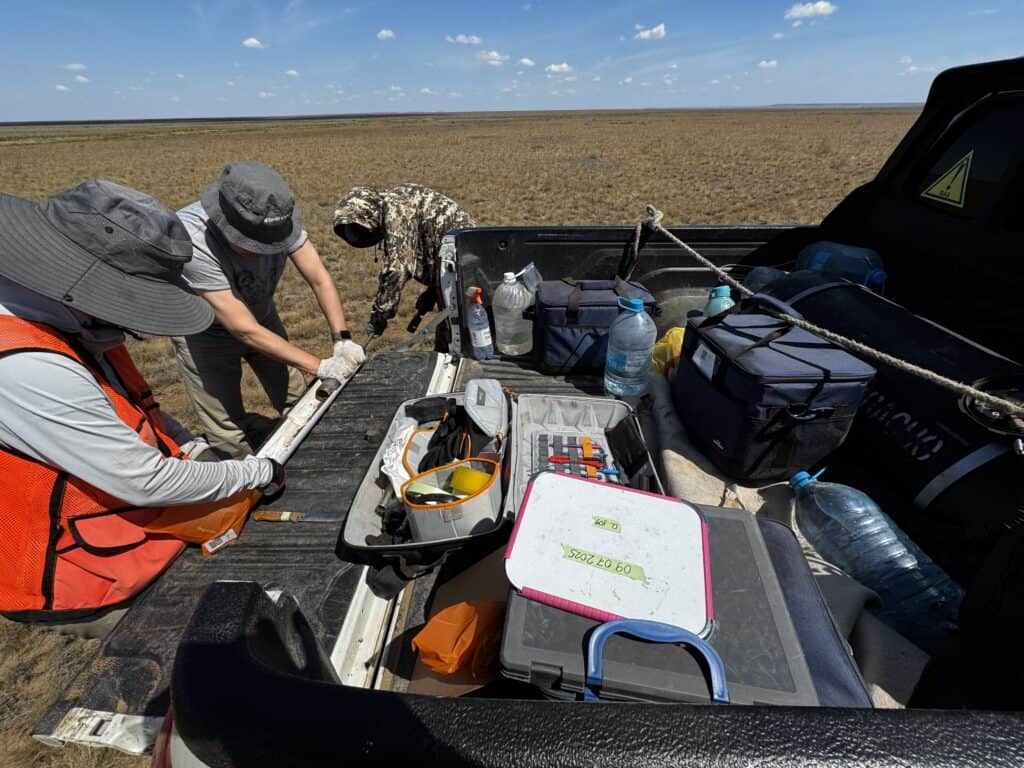
Unlike vehicle-mounted nutrient samplers that collect small, grid-based samples – which studies and Verra guidelines indicate are less representative – our method employs AI-based strata prediction algorithms for optimal digital soil mapping (DSM). We collect intact 50 mm diameter cores, even in planted fields, from various depths (e.g., 0-10 cm and 10-45 cm).
Our processes pioneer the use of DSM under Verra VT0014, in collaboration with Perennial – making rTek one of just three global companies to adopt this tool at launch.
Organic Carbon Analysis (SOC/TOC)
Measure organic carbon content with unparalleled accuracy using the dry combustion (Dumas method) on our Skalar Primacs SNC-100 TN/TC analyzer. This instrument features DIN mode for differentiated carbon analysis and acid purging to handle NPOC (non-purgeable organic carbon).
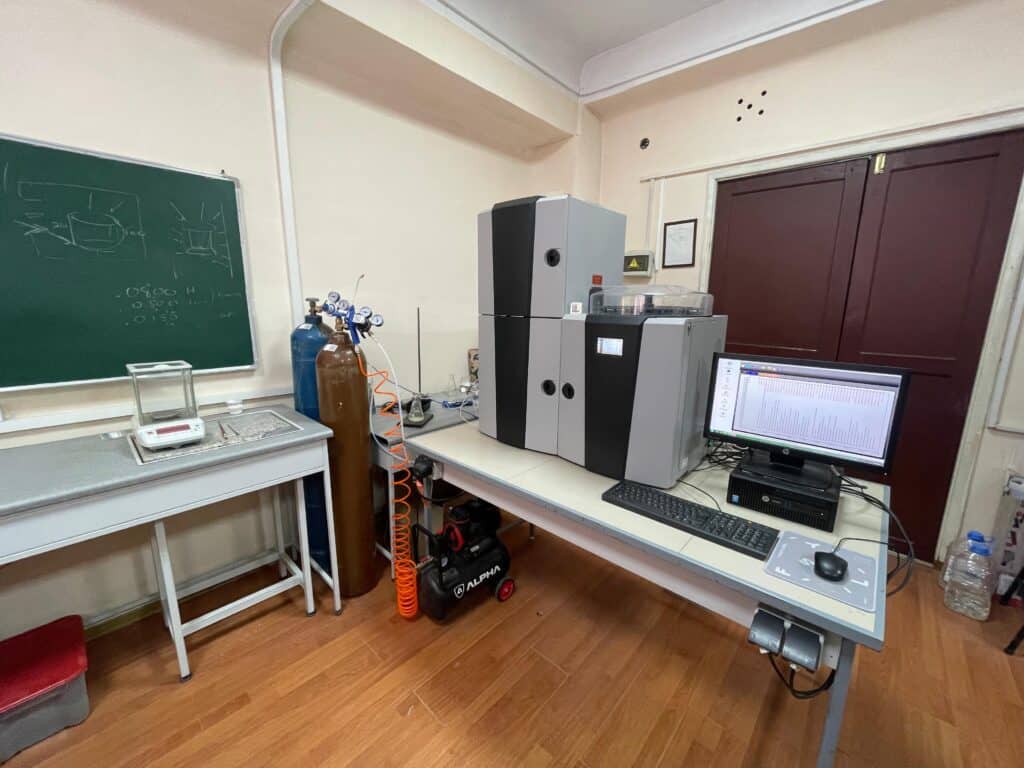
Applicable to soils, biochar, food products, beverages, and beyond, our analysis supports everything from agricultural fertility assessments to carbon credit verification.
Bulk Density and Coarse Fraction Determination
Using the core method with intact cores, we provide precise bulk density calculations (typical for chernozem soils: 1.1 g/cm³ for 0-10 cm and 1.2 g/cm³ for 10-45 cm). We exclude >2 mm fractions like gravel and plant residues through sieving, fully adhering to ISO 11272.
This service is essential for accurate soil health evaluations and carbon stock estimations.
Soil and Material Texture Analysis
Our SP2000 system delivers texture testing with models for clay and pH, offering detailed composition data for agricultural soils, biochar, and other materials.
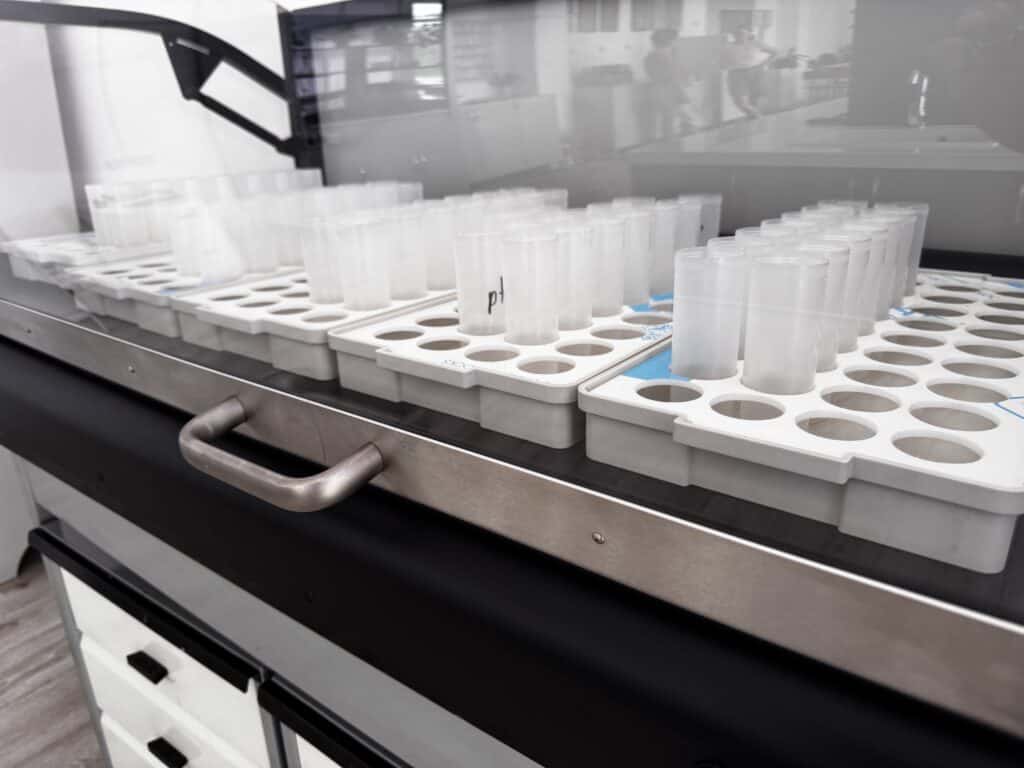
Enhance your understanding of material properties to improve productivity and sustainability.
Nutrient Analysis
Configured on the SAN++ system, we test for NH3 (ammonium), PO4 (phosphates), K2O (potassium), and Zn (zinc). The Skalar Flame photometer adds Na (sodium), K (potassium), and Mg (magnesium) for a full macro- and microelement profile in soils, fertilizers, food, and beverages.
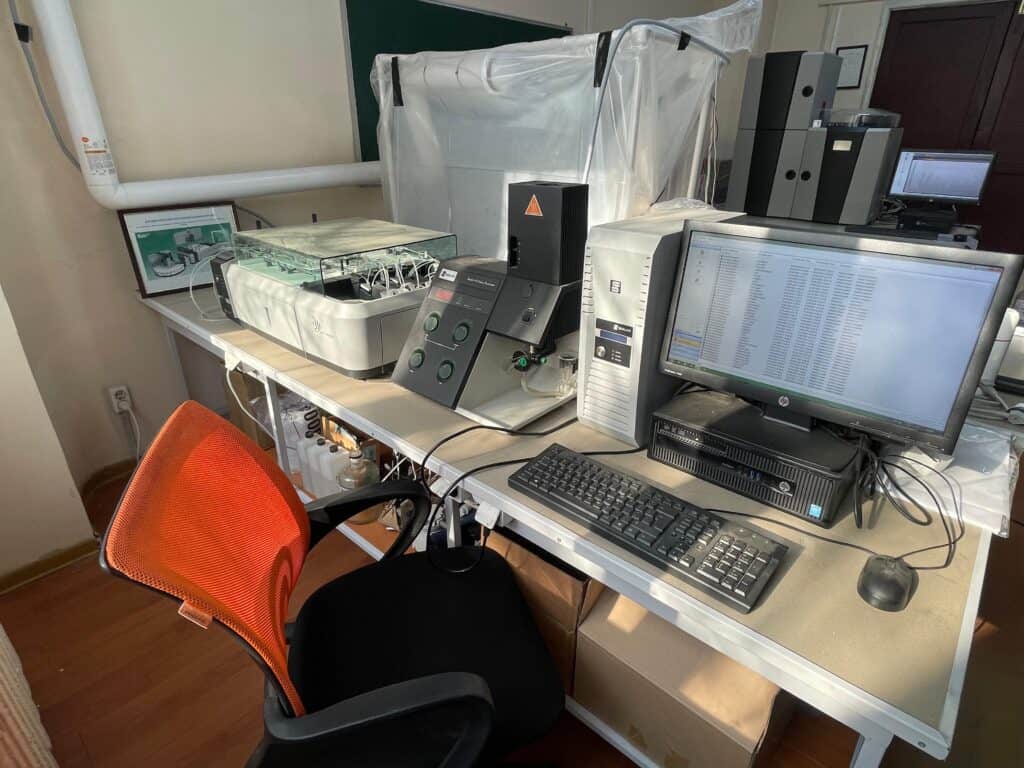
With comprehensive nutrient analyses, you can quickly make changes to fertilizer and agronomic prescriptions. Additionally, micronutrients (Zn, Na, Ca) are critical for restoring health in saline or contaminated soils.
Storage, Processing, and QA/QC
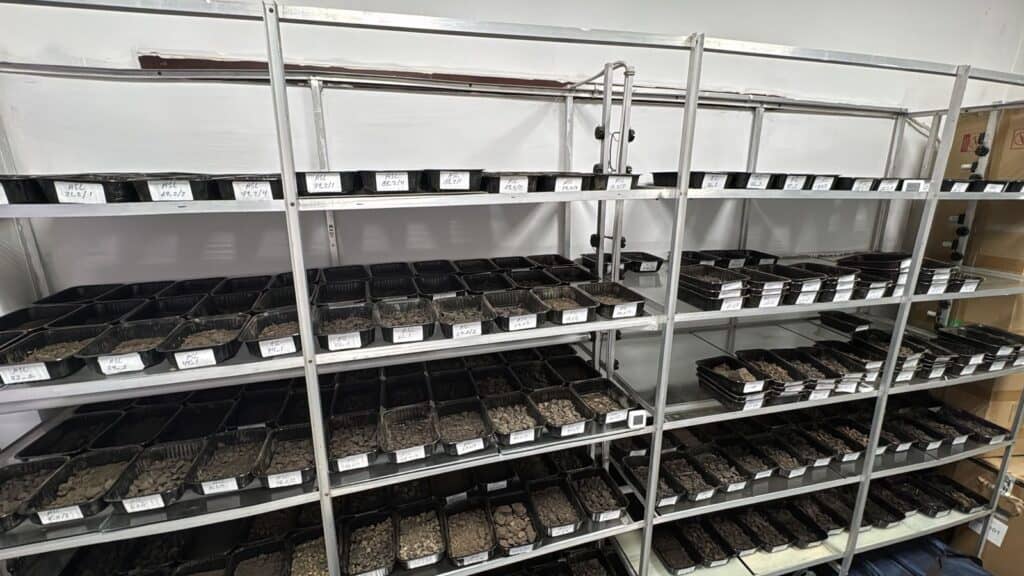
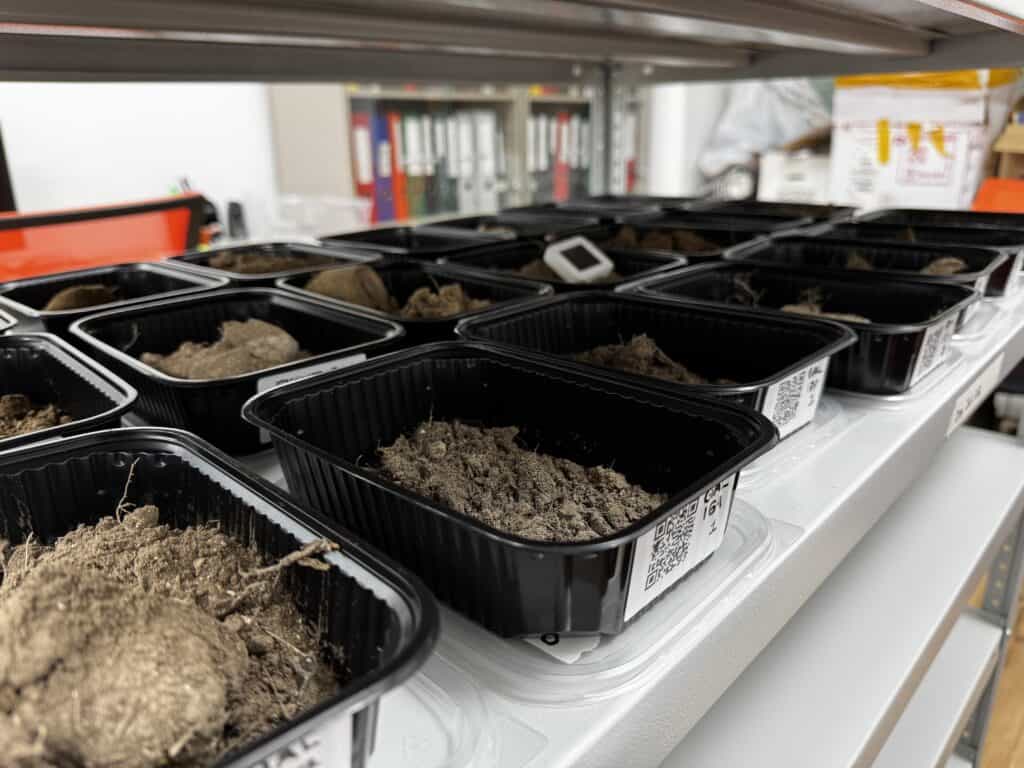
Samples are stored in controlled conditions (refrigerators at 6°C) and managed via our LIMS system with geotags, QR codes, and full auditing. We ensure quality through duplicates, calibrations, and round-robin tests – including QC lab controls from Brookside Lab in the United States – to minimize errors and maintain ISO 17025 standards.
Why Choose rTek?
- Standards Compliance: Adherence to Verra VM0042, ISO 10694 (carbon), ISO 11272 (density), and ISO 17025 (operations). We avoid composites for superior DSM accuracy.
- State-of-the-Art Equipment: Skalar Primacs SNC-100, SP2000-pH/EC/Alkalinity/Turbidity, SP2000-Lutum, SAN++, Model 410 Flame photometer– calibrated for diverse applications.
- Experience in Tough Conditions: Proven success in late-season sampling with Garmin navigation and vibration drivers for clean coring.
- Global Expertise, Local Focus: Pioneering international testing in Kazakhstan.